Showing posts with label Victorian mystery. Show all posts

Sunday, April 1, 2018

An Old Betrayal by Charles Finch (A Charles Lenox mystery)

One of the best things about a mystery series -- or any genre series, I suppose -- is watching character plotlines progress throughout several books. Although many series' authors deliberately set up each book so it can be read as an independent installment, there is still something particularly satisfying about reading a snippet of dialogue and knowing it refers to some wider plot arc. It's a bit like finding an Easter egg in a video game or movie.

And so although there are many things to love about An Old Betrayal, the seventh Charles Lenox mystery series written by Charles Finch, the development of several supporting characters is what makes this particular installment in the series stand out for me. In fact, it may be my favorite in the series thus far, though it may be more accurate to say it ties with A Burial at Sea.

The main mystery is compelling. It begins when Charles meets -- or rather, fails to meet -- an anonymous client of his protege Jonathan Dallington, who is ill and can not meet the client himself. It turns out the client has a rather important job in Buckingham Palace and has become an extortion victim. The reason for that extortion, however, that is the crux of the matter and leads to a wonderfully suspenseful ending. Unfortunately, I can't say anything more without breaking my personal cardinal rule of reviews of not re-writing the plot or giving any spoilers.

Additionally, the book has several delicious sub-mysteries as well, all involving people in Charles' life. Finch's skill as a writer quietly shines here -- none of the subplots feel forced or shoehorned in, and one never gets the sense that characters appear simply because they are "fan favorites", which can sometimes happen when a series becomes more popular. The most interesting of these is a mystery of sorts that threatens Charles' career in Parliament. 

All the wonderful hallmarks of the series are present in this installment, especially the elegant juxtaposition of the genteel world of Victorian London's upper classes with the feral brutality of desperate criminals. Although Charles doesn't venture into any slums in this installment, the plight of the poor is still present in the background of the book, such as when  Charles spends part of the book fighting for better housing for the poor in Parliament. The narrative sparkles with gems of historical research; my favorite was the explanation of how the word "hogwash" originated. And throughout it all are Finch's gentle humor and razor-sharp insight into human nature at both its best and worst. 

I have always believed the characters are the heart and soul of a good story. A story with a meticulous and clever plot and perhaps even a decently crafted setting, but characters without distinct personalities, is like a perfect cake in which one forgets the baking soda; it inevitably falls flat. This installment fleshes out Toto and McConnel, introduces some very refreshing and new characters (spinoff series? dare I hope?) and allows all of the established characters to grow.

A successful series installment makes the reader eager to read the next installment. When it comes to mystery series, for me, it also makes the characters seem like old friends you visit periodically. By that measure, this series is a resounding success.

Sunday, January 8, 2017

The Devil's Workshop by Alex Grecian (A Scotland Yard Murder Squad mystery)

Every so often, an installment in an ongoing series will engross me so thoroughly it is all I can do not to stand up after closing the back cover and give the author a standing ovation.

The Devil's Workshop, the third installment of Alex Grecian's Socttland Yard's Murder Squad series, is one of those books.

Grecian succeeds on a dazzling array of levels in this installment: dialogue, setting, plot, pacing; basically, writing. 

He flicks between multiple points of view and settings, changing the narrative voice accordingly, without ever allowing the page-turning, suspense-filled plot to flag. All of the events in the book, remarkably, basically take place over the course of a little over a day.

So the plot and pacing are as good a place to being as any in describing what made this such a wonderful read.

Briefly, this installment finds Detective Walter Day and his loyal partner Nevil Hammersmith being woken in the wee small hours of the morning to find several murderers who have been broken out of a prison. (The prison break itself, by the way, is worth the cost of the admission.)

One of the escaped prisoners is the same serial killer from the first novel in the series, one of Grecian's most skin-crawling villains. The other is The Harvest Man, who is just as chills-inducing and disquieting, the kind of character that whispers in your mind long after you've stopped reading for the night.

Normally, I roll my eyes when authors bring back old antagonists, but in this case Grecian has plausibly, and engrossingly, brought back both. It makes sense both in terms of this particular installment in the series and in terms of the larger, overall series plot arc.

Adding to the plot is the existence of a shadow society that kidnaps and tortures men who they believe have gotten away with murder. One of their victims is Saucy Jack himself, which is why, of course, he seems to have inexplicably disappeared.

On the character development side, Day is nervous about an upcoming major life event and his old mentor returns to help hunt down prisoners.

That's a lot of plot, characters and settings (more on the settings in a bit). Yet Grecian writes so efficiently that the story does not become cluttered with characters and side plots.
No dialogue is wasted; it all furthers the plot or sheds insight into a character. Descriptions are just enough to allow the reader's imagination to fill in the blanks, but are deep enough to get the reader started.

The settings are also rich and varied. They include a tiny street tea vendor's stand, a cozy family home, a desolate prison on the outskirts of London and finally the fiendish twists and turns of underground London, with its rivers, catacombs and abandoned, ancient cellars and all.

Finally, once again I am pleasantly surprised by Grecian's Jack the Ripper. So much has been written about Jack the Ripper, both in nonfiction and fiction, I can't help but approach most series centering around Saucy Jack with a bit of trepidation. As a true crime fan, I've read enough about him to spoil most Ripper pastiches, though I don't ever blame a writer for mining such a rich patch of criminal history.

Grecian's Ripper succeeds because first, it evident that Grecian has done his homework, researching both the Ripper and what his mental illness may have been. So although there is, of course, gory violence that gives one goose bumps and, perhaps, a bit of nausea, it is never gratuitous. It is the logical action based on Jack's own twisted internal logic, and that lends it credibility.

Horror is not a genre I generally read, but every time I read a Scottland Yard's Murder Squad installment I am grateful for Grecian's background in that genre. I read this around Halloween for my scary book and was not disappointed in the least.

Sunday, May 15, 2016

A Death in the Small Hours by Charles Finch (A Charles Lenox mystery)

Though some might say the book should end once the mystery is solved, I for one was happily relieved to witness several key events that serve as subplots in A Death in the Small Hours, Charles Finch’s sixth installment of his wonderful Charles Lenox mysteries.

The deft and artful way in which Finch drops the reader into a pleasant or interesting situation makes one feel a bit like they are strolling in an impressionist painting. The setting is slightly idealized (though still well-researched), with an emphasis on beauty and mood. He writes with a painter’s sense of hue, including just enough to detail to throw the entire image into sharp relief. (I suspect this is especially true for readers such as myself who have not had the fortune to actually travel to England, despite spending thousands of literary hours there, both in the past and present.)

For example, much of this book takes place at Everley, where Lenox’s uncle (technically cousin, but that’s not really the relationship the two have) tends beautiful surrounding gardens and sits as magistrate and de facto squire to the village of Plumbley. As the Lenox family rides up to the estate, a place of many happy memories for Charles, we are told that Everley is “had none of the grandeur of a palace, or of the great medieval castles—it was only two stories—yet it had a beauty all its own” (p. 35, 2012 Minotaur Books U.S. paperback).

The subsequent description has just enough detail to make it a firm setting in the reader’s mind– we are told of an old wing built in 1220 and a “more recent” Queen Anne-period hall, of a pond and “small gardens with gravel paths, not grand but perfect in their beauty” (Ibid.)

Yet the description simultaneously lacks just enough detail to allow Everley to become a place of the reader’s imagination – in my opinion, best balance a writer can strike.
But that is nothing new from Finch. He has remained remarkable in his ability to create atmosphere and strike a consistent tone without getting stagnant. Indeed, this book installment contains quite a few plot twists, one of which was totally unexpected. And, for those who enjoy just a bit more action and derring-do, you’ll find this installment has plenty of both.

Still, it is still almost what I would call a cozy, though there is some physical action and, of course, a tragic and senseless murder. The murder comes on the heels of vandalism that has recently been occurring in Pemberley. At first, Lenox believes them to be the antics of restless schoolboys but the cryptic, sinister messages that accompany the destruction preclude school boy antics. Naturally, the murder draws both Lenox and the reader into the main plot, even though poor Lenox initially goes to the country to complete a career-making Parliamentary task.

If there can be said to be a major flaw with this installment, it is that perhaps Finch is too enamored with his own characters. But, who can blame him? They’re wonderful. But then again, that’s a bit of the rub, too. One wants to gets to know them more but Finch, and by extension Lenox, who are nothing if not gentlemen, retain a respectful distance that keeps some of the more minor characters at bit at arm’s length. But perhaps I’m just a pushy, nosy American.


All in all, while I wouldn’t call this the best installment of the series, I would say it’s a solid entry into what continues to be a great series. This is a relief given certain major character developments that had me worried the series would inevitably devolve into something else. But existing fans will enjoy it, I’m sure, and those who are new to the series will find it a perfectly good introduction to most of the main characters. 

Sunday, February 14, 2016

The Black Country by Alex Grecian (A Scottland Yard Murder Squad mystery)

Alex Grecian, the author of the Scotland Yard Murder Squad mystery series, also writes a graphic novel series called Proof, the first volume of which I just received from the hubby as a Valentine's Day gift.

Though I haven't read it yet, a quick page-huff (what is it about the tantalizing smell of a new book? Or an old one, for that matter? Any fellow book-huffers out there?) and glance through indicates the graphic novel series, like the first two Grecian mystery novels, could easily be classified as horror as well.

And though I do not consider myself a fan of horror, either books or films (though I do enjoy the occasional ghost or Faustian devil story), I am now more a fan of Alex Grecian than ever. And I think it's due to the depth added to Grecian's stories by integrating horror.

Which brings me to the surprise of The Black Country, Grecian's second installment in the Scottland Yard Murder Squad series. I confess it took me a while to read this book because the premise didn't pique my interest. Inspector Water Day and Sergeant Nevil Hammersmith are sent to a rural coal mining town when a prominent family disappears.

I should have known better than to doubt Grecian. From soot-covered blankets of snow to grim-faced workers who trudge silently to their shifts, there is a sinister undercurrent that imbues every page of this book. Adding to that is the fact that many of the village homes are literally sinking into the hollowed-out ground beneath them. But of course, the owners have nowhere else to go. And then there's there's the creepy children.

In a previous post on this series's first installment, I rhapsodized about the best nightmare scene I had ever read (a passage I read aloud over the phone to a friend of mine that actually produces his own horror hosting show and is a Rondo Award winning horror blogger; he loved it). The opening vignette in this book is of the same caliber, a bar Grecian does not fail to meet during the rest of the story.

As Day and Hammersmith race against the clock and battle the small-town circling of the wagons of the residents, the reader is constantly put off balance by vignettes that reveal a killer, though not necessarily the same killer Scottland Yard is searching for.

To say more without spoilers would be difficult, so I will only add the one minor criticism I have, which is that Grecian does tend to rely quite a bit on dialogue for character development. That's not a bad thing in and of itself -- it's a great tool, especially when one is as good as he is at giving characters different voices as he is -- but I think he forgets sometimes that novel readers don't have a visual cue for physical action the way a graphic novel reader does. At times, the extended dialogue felt a bit stilted and broke the narrative flow.

Not nearly enough, however, to take away from the book as a whole. I already own the third installment in the series and can't wait to begin it...after I read Proof, of course.


Sunday, November 8, 2015

Fatal Enquiry by Will Thomas (A Barker and Llewelyn mystery)

A Fatal Enquiry, Will Thomas' first entry into the Barker and Llewelyn series after a multi-year hiatus, is at once a relief and a disappointment.

First, the good: Llewelyn returns in fine form, his narrative voice as clear as ever and, though a bit wizened from several years of working with Barker, still shows all the affability, cockiness and impetuousness of his 21 years.

Thomas' Victorian London is also still intact, redolent with historical places that range from cafes attached to Masonic lodges to Westminster Abbey to shabby Thames waterfronts.

The plot of this installment, during which Barker and Llewelyn are on the run from various parties after Barker is framed for murder by his Moriarty-esque nemises, is well-thought out and interesting enough to keep on turning pages.

But.

There was something desperate about this installment, which often felt like a thinly-veiled advertisement for the previous books in the series as well as a mad grab for the American action mystery set. Some action is fine, of course. There's no point in reading a mystery in which the detectives are always safe as houses, after all. And fight scenes in this series in particular make sense since martial arts is very much a part of who Barker is. And it makes sense Barker would train Llewelyn and that Llewelyn would need to use that training. But all the running around and fighting just felt tedious in way it never has before.

Thomas has also developed an exasperating habit of unnecessarily recapping what happened in the last few pages. If I just read about how three Scotland Yard officers were thwarted from capturing the pair while they're running on a bridge, don't begin the next chapter with a summary. It read like a not-so-subtle humblebrag, as though Thomas were playing at bashfully saying, “Look at what an immensely entertaining scene I just wrote! Aren't you glad you're reading this?”

Well, I was. Until the fourth recap.

Adding to the narrative disruption, beloved characters and places from previous novels were gratuitously shoved into this story. It's as though Thomas felt if he didn't have Llewelyn go to the Barbados for a mocha and smoke the pipe with his name above it, all while philosophizing with Israel Zangwill, his fan base would disappear (we won't).

Likewise, Barker's ward and partner were both shoehorned into the story, though the latter served well to shed some light on Barker's mysterious past (which was, sadly, predictable and unimaginative; hint: a woman fueled the animosity between Barker and his nemesis).

On one hand, I get it. Readers like me return to mystery character series precisely because of the characters we come to know and love. I look forward to seeing Billy in every Maisie Dobbs mystery and of course enjoy it when Ian Rutledge's sister makes an appearance.

But here, Dummolard and Israel and even Mac to some degree just got in the way of, you know, the actual plot.

And, while Barker's nemesis Nightwine was great when he first appeared, here he became a rather lazy Moriarty rip-off. The femme fatal wasn't much more compelling, either. Of course she's a stunning blonde assassin, and of course she's kinda-sorta-not-really a victim of circumstance. Yawn.

(How I wish just once a femme fatal could be frumpy or clumsy or have a poor sense of fashion or wear sensible shoes because walking around London to reconnoiter a target must be hell on one's feet! Imagine a hero falling in love with a woman who is less than beautiful but has other charms to recommend her. But no, surely if that were to happen the entire niche publishing industry of Victorian mystery series would collapse, I suppose.)

In short, I wish Thomas would have just let the story he was trying to tell be the story. We'll come back to see Mac or Dummolard another day, we promise.

Thursday, April 9, 2015

A Burial at Sea by Charles Finch (A Charles Lenox mystery)

One of the few things better than a mystery set during the cold, foggy nights of Victorian London is a mystery that takes place on a ship of the Royal Navy during the same era.

Something about the creaking wood and restless canting of an old ship, or the glory of a full sail clip into a rising sun and saltwater spray, simply begs for intrigue, murder and (one can only hope) mutiny. After all, there's nowhere for suspects to escape to except Davy Jones' locker, adding a wonderful tension to even mundane interactions.

Charles Finch, like other British mystery authors before him*, answers a call to the water in A Burial At Sea, the fifth installment of the Charles Lenox mysteries. It does not disappoint. 

The confinement of a ship at sea gives nautical mysteries a classic, drawing-room whodunnit feel but that framework is only as good as the writer working within it. Without believable, unique characters even the most well-established ship and setting will sink into flat, two-dimensional stereotypes of men at sea. 

Fortunately, Charles Finch does not run into this problem at all. The characters, of which there are quite a few, are easy to keep track of because they each have a unique voice. And, there's the subplot of Lenox's diplomatic mission as well, which finishes the book nicely. 

Briefly, Charles Lenox is sent on a diplomatic mission to France, one that puts him aboard the H.M.S. Lucy. It is nearly impossible to say more and still uphold my promise to never re-write a plot or give spoilers, but suffice it say that all the key ingredients -- secrets, jealousies, rivalries, friendships sealed with saltwater, etc. -- are all present and accounted for, but twisted just enough to keep from being predictable.


I've written before about Finch's ability to use the theme of class disparity deftly as both a plot device and for character development, but Lenox at sea is in an especially fascinating position. On the one hand, Lenox still a gentleman and passenger. Yet, at least while at sea, whatever his standing on land the captain, out of pure necessity, outranks Lenox at sea. There is a convincing scene during which ballast has to be explained to Lenox and the sailor is so shocked that one might not know this he forgets to call Lenox "sir." Lenox, naturally, does not note or point this out (honestly, where have impeccable manners like Lenox's gone? Sigh.). The new hierarchy dynamic is intriguing and adds a new dimension to the social stratification prevalent in the previous novels.

The main strength in this installment, however, is the characters aboard the ship, one of whom happens to be Lenox's nephew (Finch writes young men very well, incidentally). 

And, as ever, Finch weaves historical fact into his fictitious story with the deft skill of a sailmaker. The long-term plot arc proceeds apace (sorry, no spoilers here!) and Lenox eventually returns to land...and duties that may take him farther away from his sleuthing.

Whether Lenox can survive swallowing a few red herrings while attempting to keep alive  is more than enough intrigue to keep the pages turning.
                                                                                                                                                                                                                                                                                                                                                                                                                                       
See: Bruce Alexander's Watery Grave, an installment in the Sir John Fielding mystery series, for another wonderful mystery aboard a Royal Navy ship, set during the Georgian period. 

Tuesday, June 4, 2013

The Yard by Alex Grecian (A London Murder Squad novel)


Few things make a reading experience more pleasant than when a book offers all the comforts of a familiar genre without being cliché and still having enough surprises in the plot to keep one eagerly turning pages.

Alex Grecian’s TheYard, the first in a new London Murder Squad series, skillfully achieves this, managing to cloak the reader in a Victorian London fans of the genre will find as familiar as an old, well-worn quilt while simultaneously breathing new life into the setting.

And he does all this without even making the book a mystery, though that doesn't diminish the reading experience at all.

First, the time period.

While setting a novel while London is in the grip of fear caused by Jack the Ripper is old hat, Grecian has interestingly set his novel just after the Ripper murders have stopped. This serves to create a more intriguing environment when police morale is especially low, matched only in its depths by the public’s trust in the police. 

Still, it is then that the new murder squad – a special unit of 12 officers – is formed, gated off from the rest of sprawling squad room in the Yard and set to the Sisyphean task of solving some of the thousands of murders the city sees each year.

Fine as a premise in and of itself, but Grecian has injected new life into the well-worn plot foundation, primarily through the uniqueness of the characters populating the squad. 

Each officer is fleshed out and surprisingly complex, adding to their realism. Usually, when dealing with a whole squad, to say nothing of the outsiders involved in the murders taking place, writers will be forced to rely on singular defining aspects of each person, creating a group that is almost cartoonish and reminiscent of a formulaic buddy group movie.

Yet Grecian does not, respectfully taking the time to sketch out each man, filling in details that add to their humanity but without bloating the book.

Sgt. Blacker, for example, is a red-hair jokester with an affinity for puns, but he is also loyal and takes his job very, very seriously. The contrasting personality aspects are exceptionally believable, just as one might have a neighbor who is meticulous about their lawn but can’t keep their car clean.

The squad is led by Col. Sir Edward Bradford, who has one arm and has just returned from the British raj. Grecian’s handling of Bradford as an amputee is masterful, acknowledging it in a realistic way without turning Bradford into a two-dimensional, cardboard character defined by one of his more obvious traits.

 In short, unlike most authors, Grecian doesn’t shout at the readers from between the lines, screeching, “Look! An amputee! Betcha haven’t seen this before!” as I suspect many writers would inadvertently do.

The same can be said for the ancillary characters. An example would be two brief interactions between a landlady and a supporting characters. Neither of the exchanges are particularly long, but both leave the reader with a vibrant understanding of who the people are.

Then there’s the plot itself.

Or rather, plots, but I won’t say more because I loathe spoiler reviews.

Still, I can only say that just because Grecian reveals who the culprit is does not, surprisingly, mean there isn’t far more tell.

And of course there's Grecian's writing.

And Grecian tells his story exceedingly well, switching between points of view skillfully and subtly interweaving historical detail that taught me – an avid reader of several Victorian London mystery series for the past 20 years – new things about the period.

Though I normally hate dream sequences, Grecian wrote one of the best nightmare sequences I have ever come across, both in terms of writing and actually being frightening. 

Short chapters, often opening unexpectedly, give the entire novel the suspenseful rhythm of a train gathering speed on its tracks.

And all of this is accentuated with excellent historical detail. Grecian is a writer who enjoys his research but does not bludgeon the reader over the head with it. He has a fine instinct for what readers will find interesting first and informative second.

Fans of forensic history will undoubtedly enjoy the introduction of Dr. Bernard Kingsley, who teaches our burgeoning squad about some of the newer forensic methods. Again, while the idea of a "rogue" doctor using forensics to help solve a crime is hardly new (after all, Sherlock was developing a chemical to positively identify blood spatter when we meet him), again Grecian somehow makes the concept seem refreshing. 

Delightfully, Grecian has ended this first installment with plenty of room to continue to grow. There’s more to learn about the characters, the time period, the setting….like all really good books, one is left eagerly looking forward to spending time with the characters again and learning more about forensics roads carved in the Ripper’s wake. 

Saturday, June 30, 2012

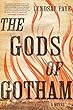
Gods of Gotham by Lindsey Faye


The Gods of GothamI can count the number of books I couldn’t bear to finish on one hand, and this was one of them (and that was a crushing disappointment).

I simply can’t fathom what the people who love this book are raving about.
Yes, Faye can turn a phrase, and there are moments of stunning writing (for example, when the protagonist is describing his brother, who is high on morphine, Faye writes, “the minutes dripped from his eyes like blood from a corpse”). 

And clearly, she has done an immense amount of research into both the social and political atmosphere of the time.

Unfortunately, neither of these two things in and of themselves make for good storytelling.

The first main issue I had with this book was Faye’s clunky, ham-fisted way of enfolding the research she did into the story. Instead of using information to weave a picture made of many threads of historical fact, she takes a mediocre event or plot point at best and shoves facts all over it, the same way wedding dress designers put random, stupid bows on gowns.

This problem presents itself in two main ways.

The first is Faye’s horrible use of flash, the slang of the poor in New York at the time. She would have been well advised to look to Bruce Alexander’s Murder in Grub Street for a much-needed lesson on how to fold flash into a story to create atmosphere. Instead, she bludgeons the reader over the head with terms that, given the rest of the protagonist’s tone, come across as jarring and don’t seem to fit. Granted, flash isn’t the main character’s main way of speaking (so why does he use the terms in soliloquy, then?), but even so it’s distracting.

And the characters that should use flash don’t.

The second example of this is the tedious way Faye describes New York. It’s obvious that she lives in contemporary New York and even more obvious that she loves it. Which for her, at least, is a problem because it makes reading the book a little like having to sit through watching someone else play a video game.

Travel is told through directions (I went north on this street and south at this street), which  in my opinion is a pretty boring way to write character travel to begin with. But unless you’re familiar with the streets and how they look now, how they looked during the 1800s simply falls flat. Even worse, the map printed on the inside of the front and back covers of the book doesn’t show half the streets Faye refers to, so you can’t even try to follow routes that way!

There are some interesting characters, like Matsell, but they are poorly developed. And even the main character, Tim, is wearying. He’s a barkeep who notices everything, but is too naïve to notice the girl who run into him is a “kinchen mab”? And the murders of children shock him? Really? But he worked in an oyster house? Please.

And his alleged love-hate with his brother is poorly developed and terrible. His resentment is badly—very, very badly—mixed with awe and admiration. Val, the brother, should be a complex character but really isn’t. And the object of Tim’s affection, Mercy, is equally half-sketched and cumbersome (we get it; she speaks in riddles an helps the poor; move on already!).

And on top of all that, the writing is choppy, lacks flow or pacing and the story isn’t interesting enough to look past it.

No, dear friends, this is a novel publishers were likely hoping would ride on the coattails of the current Sherlock resurgence (don’t even get me started on that…) and the increased interest in the Victorian era that resulted. I can’t wait until the Victorian isn’t trendy anymore so only the cream rises to the top again.

Tuesday, December 27, 2011

The Alienist and Angel of Darkness by Caleb Carr


I thoroughly enjoyed both of these books. The Alienist is so well-researched and vivid you truly get lost in London and can almost smell Bedlam as Kreizler, the pioneer of mental health, helps to solve truly heinous crimes. The ecclectic group of characters (not the least of whom include Teddy Roosevelt) is a perfect set up for a classic mystery in Victorian London--with a serial killer kind of twist, of course.

The sequel is equally well-done, this time narrated by young Stevie. Carr does a phenomenal job showing how London's East End has forced him to be a man while still showing that he is, ultimately, a child. The bittersweet relationship he has with a young prostitute is a nice side story to main mystery plot.

The Italian Secretary by Caleb Carr


I'm ridiculously pedantic when it comes to Sherlock Holmes, for obvious reasons. I never much like pastiches, either. My theory is, why can't we just leave a good thing alone? 


That being said, this is an excellent Holmes and Watson pastiche. Carr has a good feel for Doyle's narrative style and (this may be what sold me on the book) we get to see much more of Mycroft, who makes all too short of an appearance in the original Holmes collection. Importantly, Carr seems just as true to Watson as he is to Holmes--he is portrayed as the intelligent, staunchly loyal medical man that he is. 


The book also incorporates a lot of action (those who yearn for Victorian train travel and political espionage will not be disappointed) and, although a good read, this is when the reader is most reminded that it is indeed a pastiche. However, the book is no less enjoyable for that. 

Some Danger Involved by Will Thomas (Barker and Llewellyn)


For several years, every November (with the exception of while I was in college), I re-read the Sherlock Holmes canon. If there was ever a series that could fill the yearning I always feel for more of the same kind of Victorian mystery and pure friendship, this is that series.

Barker and Llewelyn are a great pair, a study in contrasts given Barker's slightly misanthropic, wizened and dourly religious discipline and Llewelyn's youthful impetuousness and gregarious, if a tad naïve at times, nature.

Will Thomas borrow liberally from history, and his Victorian London teems with wonderful characters both real and not. Unlike many Victorian mystery series, the melting pot nature of the city is never neglected. In addition to Barker's Oriental roots, adding an interesting perspective on Victorian London, the narration sweeps you into a bustling world on both sides of the track in every book.

The supporting characters, such as Mac, the butler, or the French chef Etienne, are all as interesting as the protagonists. You spend much of the book looking forward to bumping into the minor characters as much as you do to following the always-clever plot twists.

If Holmes and Watson are to ever have competition in the hearts of mystery lovers, Barker and Llewellyn are sure to be front runners in giving it.

Thursday, December 22, 2011

A Beautiful Blue Death by Charles Finch (Charles Lenox)

What a wonderful book this was to cozy up with on a cold, blustery day! 

Charles Lennox uses his deductive reasoning skills (slightly reminiscent of Sherlock Holmes) and social graces to get to the heart of a mystery that has a nice surprise ending. The sincere desire of Lenox to get to the truth without overstepping any of the dictates set by social decorum add a nice tension to an already absorbing plot. 

Charles Finch has a particularly enjoyable way of folding London's history into a great mystery with lively characters and great twists without "showing off" his research, as some historical fiction are wont to do. 

The fact that Big Ben has only recently been built and the current political climate of the day are simply observations made by the emminently likeable and affable Lenox make both London and Lenox eminently likable. 

It is also through Lenox that Finch gracefully displays the disparity of London's social pecking order, contrasting Lenox's titled, independantly wealthy status with his servants' (and the servant who is killed in the book) lifestyles. 

Saturday, December 17, 2011

The September Society by Charles Finch (Charles Lenox)

This second installment in the Charles Lennox series is as delightful as the first. 


Charles Finch once again masterfully weaves impeccable historical research, full, rich characters and an intriguing mystery into an enveloping story. The setting in this installment is a special treat: Lenox's alma mater, Oxford. 

Even better, it is Oxford in the fall, so Lenox doesn't mind too much when a student's mother frantically knocks on his door early one morning to report that her son is missing. 


At first Lenox is confident the student will be found. But then he finds, among other strange things, a white cat stabbed with a letter opener in the student's room. The poor cat hides a cryptic note beneath it and a card simply stating "The Septemeber Society." It isn't long before it is clear that something old and dangerous has been stirring among the ghosts of Oxford's past. 


With his faithful manservant's help, Lenox manages to investigate a mystery that takes him to the depths and heights of English society, and just about everywhere in between. 

Sharp, unafraid to take risks, but never hurried, Lenox solves mysteries in a calm, gentlemanly manner that nonetheless keeps the wire of suspense taut. 


Saturday, December 10, 2011

The Fleet Street Murders by Charles Finch (Charles Lenox)


Another successful installment in a series in which every book is a pleasant, congenial read, with a tantalizing mystery to keep you turning pages.


Yet again, Charles Finch uses his light touch to throw the reader into the boisterous, amusing, and yet not-to-be-taken-lightly world of an MP election in a small, northern English town. As always, he masterfully folded what must have been fairly painstaking research into a delightful and engaging narrative in such a way it doesn't occur to the reader how much they've learned until after they've finished the book. 


Fans of Graham will be a bit disappointed that he doesn't play quite as large a role in this part, but there are several other new characters that are just as engaging who, hopefully, will make appearances in future books. Of particular note is the local pub owner who is also Lenox's northern campaign manager. 


Meanwhie, Lenox is torn between working to realize his dreams of being an MP and solving the murder that keeps tugging him back to London. Making his absences from the City even more unbearable is some unexpected tension between him and Lady Jane when she asks to delay the wedding.