Showing posts with label stand-alone mysteries. Show all posts

Wednesday, January 18, 2017

Death Comes to Pemberly by P.D. James

Death Comes to Pemberley was my introduction to the world-renown Baroness of Holland Park P.D. James, and so I am crushed to report I did not enjoy this book at all.

I was so excited to read it, too.

First, I would finally be introduced to P.D. James and, given the subject of this blog, I'm well aware of how ridiculous it is I haven't read anything else by her.

Secondly, although not a cosplaying, fanfiction-writing, convention-attending fangirl, I do so love Jane Austen. Aside from the Sherlock Holmes canon, which I re-read when I was younger every November for about six years straight, I am not, as a general rule, one for re-reading books. But I have read Northanger Abbey, Pride and Prejudice, and Sense and Sensibility twice each, and suspect at some point down the road I will certainly revisit Emma.

The premise of the mystery is a wonderful one, too. A dark and stormy night, a carriage carrying Elizabeth's infamous sister Lydia (yes, that Lydia, now Mrs. Wickham) to the Darcys' door, a brutally murdered body found in a moonlit field -- the perfect recipe to stay up cataclysmically late reading. In fact, the book jacket's synopsis made save this book for a weekend because I was certain I'd lose track of time and look up from it to see silver clouds and the sun flirting with the skyline.

Which makes this review all the more difficult to write. So I will start on a positive note, and work my way through from there.

The book does succeed in a few notable ways well worth mentioning.

Undeniably, P.D. James captured the tone, syntax and rhythm of Austen's narrative style masterfully. It is obvious James loved Austen and James certainly treated Austen's sparse but piercing writing style with respect, if not reverence. Achieving that level of authenticity is not easily done and James deserves high praise for it.

There was quite a bit of detail on the British legal system, which was at the advent of some pretty exciting and revolutionary changes at the time, and James does a nice job incorporating these. As a former law student and just a nerd in general, I thought these were some of the most interesting parts of the book, but I wouldn't be shocked if others found it to be a bit too much.

There was, of course, some rehashing of Pride of Prejudice, and even though at times I thought it tedious I can forgive it -- not everyone who picks up this book with be familiar with its basis and they deserve a full story arc, too. So for me, that wasn't the issue.

The problem was the book never seemed to really to gain momentum of any kind until the very end and, even then, one subplot was tied up in a way that I can only describe as deus ex machina at best and lazy at worst.

The dialogue felt forced and wooden, turning all of the characters into beige, blurry splotches of their beloved roots, at times nearly interchangeable.

Now, I understand that this is, after all, a pastiche; I think it's unreasonable to expect the characters in any pastiche to be exactly the same as the ones in an original work. And, given that this story takes place a good length of time after Pride and Prejudice, it can be easily argued that the characters, like real people, will have grown and changed from their experiences.

Yet all of the characters sounded like the same person was speaking, particularly the men.

Granted, there was a tone and style to speech in Regency England that reflected one's class and upbringing, and any writing tackling Austen has to be aware of this because Austen herself used that as a narrative tool so well.

So Wickham would have the same speech pattern as Darcy because it would underscore their common upbringing, and serve as a subtle way to remind the reader that despite speaking the same as Darcy they are not, and never were or will be, in the same class caste.

However, that does not mean characters would give up any and all sense of personality. The fact that Austen's characters are still beloved today proves this. But unfortunately, that is exactly what happens in Death Comes to Pemberley. 

If Lydia was being melodramatic, or Darcy frustrated, or Wickham cagey, the reader never knows this by how they act or what they say but because they are told that is the case. This may come down to personal preference but that level of expository writing in fiction simply bores me to tears.

This made a pretty decent twist ending (those who read mysteries frequently will likely figure it out pretty early on) fall flat.

Even the settings have the two-dimensional feel of a cutout for a stage play, like something James had to get through before she could go back to explaining things. The characters didn't so much interact with the places they are in so much as get put there.

Which I suppose, for me, is the best way to sum up why I couldn't get lost in this story. It felt rushed and mechanical, the fiction equivalent of reading a grocery list.

Of course, every well-plotted story has an attendant checklist -- introduce characters, give full context, describe/incorporate settings, etc. etc., and what is a plot if not map? But the reader should never see that process or even know it is happening.

Whereas while slogging my way through this book I couldn't shake the feeling I was reading a detailed basic outline of a proposed story. Had James taken the time to flesh it out a bit more, this could have been a really great pastiche.

Saturday, June 30, 2012

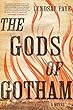
Gods of Gotham by Lindsey Faye


The Gods of GothamI can count the number of books I couldn’t bear to finish on one hand, and this was one of them (and that was a crushing disappointment).

I simply can’t fathom what the people who love this book are raving about.
Yes, Faye can turn a phrase, and there are moments of stunning writing (for example, when the protagonist is describing his brother, who is high on morphine, Faye writes, “the minutes dripped from his eyes like blood from a corpse”). 

And clearly, she has done an immense amount of research into both the social and political atmosphere of the time.

Unfortunately, neither of these two things in and of themselves make for good storytelling.

The first main issue I had with this book was Faye’s clunky, ham-fisted way of enfolding the research she did into the story. Instead of using information to weave a picture made of many threads of historical fact, she takes a mediocre event or plot point at best and shoves facts all over it, the same way wedding dress designers put random, stupid bows on gowns.

This problem presents itself in two main ways.

The first is Faye’s horrible use of flash, the slang of the poor in New York at the time. She would have been well advised to look to Bruce Alexander’s Murder in Grub Street for a much-needed lesson on how to fold flash into a story to create atmosphere. Instead, she bludgeons the reader over the head with terms that, given the rest of the protagonist’s tone, come across as jarring and don’t seem to fit. Granted, flash isn’t the main character’s main way of speaking (so why does he use the terms in soliloquy, then?), but even so it’s distracting.

And the characters that should use flash don’t.

The second example of this is the tedious way Faye describes New York. It’s obvious that she lives in contemporary New York and even more obvious that she loves it. Which for her, at least, is a problem because it makes reading the book a little like having to sit through watching someone else play a video game.

Travel is told through directions (I went north on this street and south at this street), which  in my opinion is a pretty boring way to write character travel to begin with. But unless you’re familiar with the streets and how they look now, how they looked during the 1800s simply falls flat. Even worse, the map printed on the inside of the front and back covers of the book doesn’t show half the streets Faye refers to, so you can’t even try to follow routes that way!

There are some interesting characters, like Matsell, but they are poorly developed. And even the main character, Tim, is wearying. He’s a barkeep who notices everything, but is too naïve to notice the girl who run into him is a “kinchen mab”? And the murders of children shock him? Really? But he worked in an oyster house? Please.

And his alleged love-hate with his brother is poorly developed and terrible. His resentment is badly—very, very badly—mixed with awe and admiration. Val, the brother, should be a complex character but really isn’t. And the object of Tim’s affection, Mercy, is equally half-sketched and cumbersome (we get it; she speaks in riddles an helps the poor; move on already!).

And on top of all that, the writing is choppy, lacks flow or pacing and the story isn’t interesting enough to look past it.

No, dear friends, this is a novel publishers were likely hoping would ride on the coattails of the current Sherlock resurgence (don’t even get me started on that…) and the increased interest in the Victorian era that resulted. I can’t wait until the Victorian isn’t trendy anymore so only the cream rises to the top again.

Sunday, June 10, 2012

The Thief Taker by Janet Gleeson


There are many things one can reccommend Janet Gleeson's The Thief Taker for, and yet despite all of them, if I were to rate the book on a "star" rating, it would only garner three out of five stars. 
It's a little difficult to explain why this is, so much so I had to delay writing this review in order to be able to articulate it well. 
The Thief Taker: A Novel by Janet GleesonAfter all, the writing is good, if not great. Gleeson, who is a historian and author of two non-fiction books, has clearly done her research and it shows in the nicely embedded details throughout the novel. There are detailed descriptions of Agnes Meadows, the cook, preparing meals for the family, good use of period language (though this is inconsistent--at times, the narration slips into a modern colloquial speech that is rather jarring), and well-entwined reminders that men wore wigs, servants were little more than slaves and London was not always the great, modern metropolis we think of it today as. 
The mystery itself is intriguing, if not gripping: After a wine cooler has been stolen from the famous silversmith family of the Blanchards and an apprentice murdered, family cook Agnes Meadows is asked by the lady of the house to look into the murder. Meanwhile, the lady's husband, Nicolas, has asked Agnes to be the liaison to recover the stolen piece from a notorious thief taker. 
But for all of that, it was difficult to become completely immersed in the book, partially due to, I think, Gleeson not developing the characters fully. 
Meadows, for example, is ostensibly a naive cook who, after being in an abusive marriage, is content to cook and provide a good life for her young son. But her naivete becomes irritating because is seems inconsistent: she is by turns cynical enough to deduce the nefarious motives of suspects but totally oblivious as to what to do about men hitting on her. She is observant about details and yet has no idea how she is being perceived by those around her. She is simultaneously emotionally closed off and yet yields to developing relationships quickly. It should be intriguing, but instead is just maddening. 
This doesn't just end with Agnes, either. The thief taker, the most interesting character in the book, is similarly only half-sketched. 
As the reader, we are constantly led down a garden path of getting to know any number of characters--the thief taker, the other servants, the household--only to see these threads get dropped. We discover, for example, that the butler is a homosexual relationship with a servant. But for all the time Gleeson spends on this, or the butler, for that matter, it doesn't actually have anything to do with anything. That would be fine if it served as a logical red herring to the mystery, but if it does it is only barely one. Several other characters are treated similarly. 
And that's a shame because, as I said, this is one of the most almost great books I've read in quite some time. I don't regret reading it, but I got through the entire thing with a sense of still waiting for it to really begin. 
Armchair sleuths will likely figure out what is going on before reaching the end of book and will enjoy the period detail, as I did. But all the same, it is not a truly satisfying read. Instead, it feels more like when one has enjoyed a good, but not spectacular, meal and finds they are still vaguely hungry afterwards. 


Tuesday, December 27, 2011

The Murder Stone by Charles Todd


Charles Todd is one of my favorite authors of all time. 


At first, I was a bit worried about him publishing an independent story--what would happen to him without Ian Rutledge and Hamish? But this shows his mastery of the mystery genre. For anyone who, like me, never gets tired of a dead body in the library of an English manor (or variation on the basic "Clue" theme), but demands an elegant writing style, this is a must read.


What begins as a simple murder quickly unravels into a tangled skein of complex characters, social maneuverings, family secrets...really, anyone who loves a good mystery (without being ridiculous, cheesy, or predictable) can enjoy.